
Determining the actual 2019 penny value requires a detailed study regarding its origin and physical flaws.
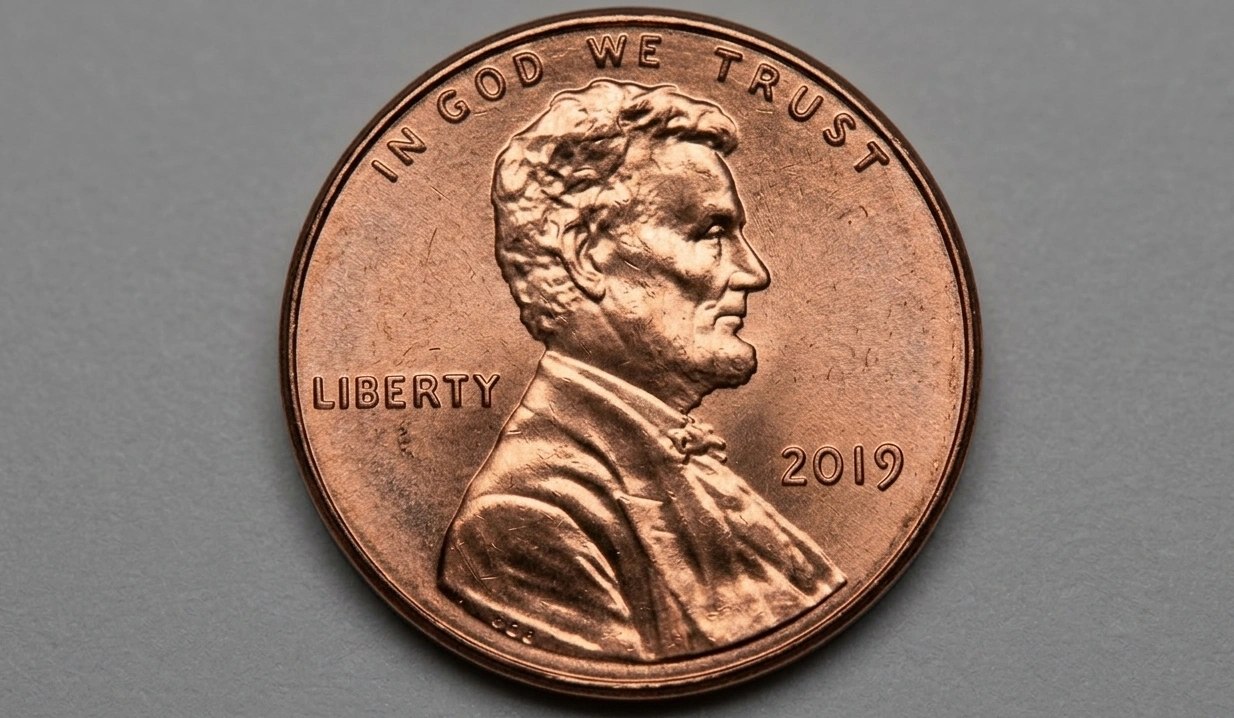
This issue concludes the second decade using the Union Shield design on the reverse side.
| Parameter | Value |
| Weight | 2.5 g |
| Diameter | 19.05 mm |
| Thickness | 1.52 mm |
| Core Composition | 97.5% Metal alloy based on white metal |
| Coating Composition | 2.5% Metal alloy based on reddish metal |
| Edge Type | Plain |
| Obverse Designer | Victor David Brenner |
| Reverse Designer | Lyndall Bass |
Mintage Statistics by Production Facility
Total output exceeded seven billion units.
Distribution of production across specific facilities is presented in the following list.
- Philadelphia (no mint mark): 3,411,200,000
- Denver (D): 3,629,200,000
- San Francisco (S, Proof): 601,223
- West Point (W, Uncirculated): 342,677
- West Point (W, Proof): 601,223
- West Point (W, Reverse Proof): 412,508
Denver’s production volume exceeded Philadelphia’s output by 6.3%.
Massive quantities of coins remaining in circulation dictate a face value of $0.01 for common specimens.
Unique Status of the West Point Mint (W)
2019 marked the first period in history featuring a cent with the “W” mint mark.
These coins never entered general circulation.
Distribution occurred exclusively as a bonus included with annual coin sets.
Three distinct finish variations exist for these items.
Uncirculated coins accompanied the standard mint set.
Proof versions belonged to the classic Proof Set.
Reverse Proof specimens arrived with the Silver Proof Set.
Lack of these coins in pocket change creates stable demand on secondary markets.
Condition Evaluation via the Sheldon Scale
Value correlates directly with surface preservation.
Professional grading services employ a 70-point system.
Coins grading MS 60 and lower carry a value of $0.01.
Specimens reaching MS 67 or higher demonstrate price growth.
Annual value depreciation for average quality coins stays between 3-5% due to market saturation.
Conversely, positions in MS 69 condition gain up to 12% in value every year.
| Coin Type | Condition | Market Value |
| 2019-P | MS 67 RD | $12-$18 |
| 2019-P | MS 68 RD | $120-$160 |
| 2019-D | MS 67 RD | $10-$15 |
| 2019-D | MS 68 RD | $90-$140 |
| 2019-S | PR 70 DCAM | $45-$65 |
| 2019-W | PR 70 DCAM | $115-$155 |
| 2019-W | Rev. Proof PR 70 | $145-$210 |
Record Sales and Auction Data
Highest price indicators were recorded on major trading platforms.
Heritage Auctions documented a sale of a 2019-P in MS 69 Red condition for $2,250.
Denver mint records show $1,150 for an identical grade.
High pricing results from extreme rarity involving flawless surfaces.
Population statistics reveal fewer than 10 specimens in MS 69 grade for each mint.
Analysis of Minting Defects and Varieties
Production errors transform an ordinary cent into a valuable object.
Automated minting processes allow deviations to occur.
Types of errors discussed below possess confirmed market value.
- Doubled Die
- Die Clash
- Off-Center
- Unplated
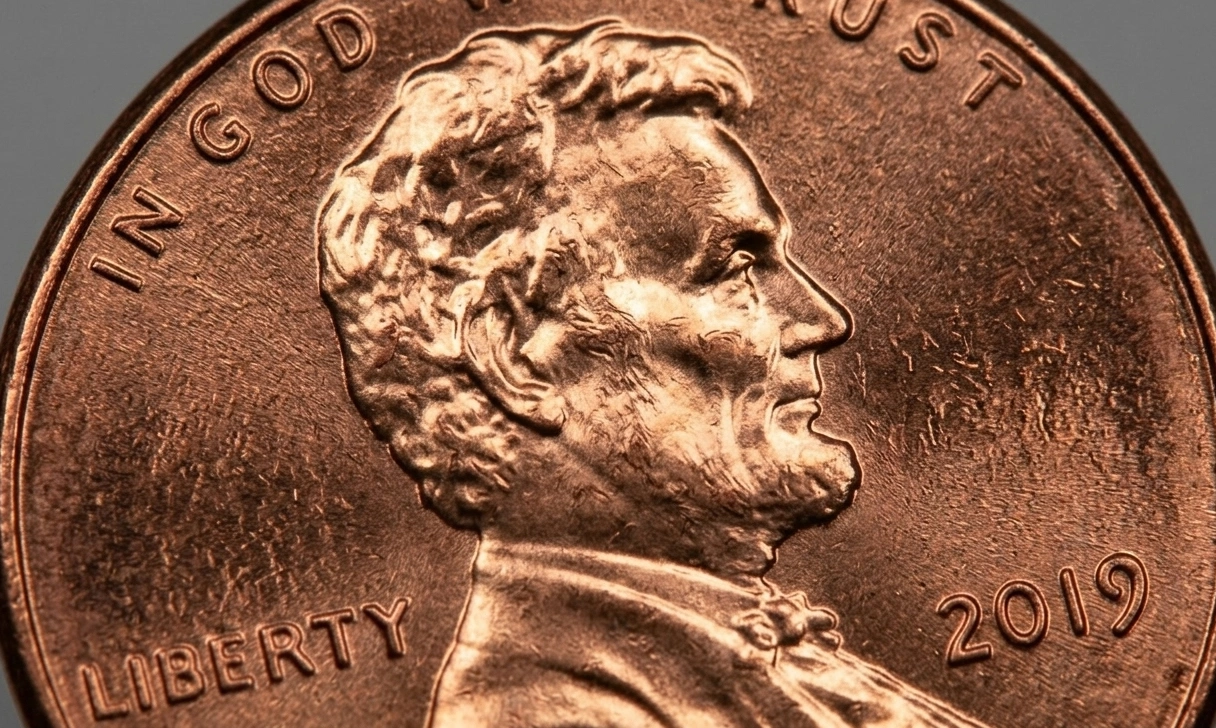
Doubling on the 2019 obverse occurs very rarely.
Primary check zones include date digits and the word LIBERTY.
Clash marks, appearing when dies strike each other without a blank, are valued at $15-$45.
Coins showing image displacement greater than 10% cost from $30 to $200.
Specimens lacking reddish coating, possessing a steel gray color, sell for $75-$150.
Surface Color Classification
Color represents a critical factor during copper coin evaluation.
Three official designations exist.
RD (Red) — coin retaining over 95% of original luster.
RB (Red-Brown) — original color portion ranging from 5% to 95%.
BN (Brown) — surface completely oxidized, gaining a brown tint.
Price differences between RD and BN in the same grade reach 400%.
Investors prefer the RD category exclusively.
Stored in high humidity conditions, an RD coin loses status within 1.5-2 years.
West Point Penny Price Dynamics
The 2019-W release showed volatility during the initial years following issuance.
In 2020, prices for sets containing the W penny rose 25% relative to the issue price.
Subsequent correction in 2022 reduced value by 10%.
By 2024, pricing stabilized at $150 for a certified PR 70 specimen.
Gradual removal of unopened sets from the market supports long-term growth.
Laboratory Composition Studies
Applied electrolysis technology ensures even distribution of the outer reddish metal.
Layer thickness measures approximately 20 microns.
Technology violations result in surface bubbles (Plating Bubbles).
This phenomenon is not considered a valuable error.
Instead, it lowers the condition score during grading.
Significance of Professional Certification
Coins lacking a confirmed grade from PCGS or NGC trade at minimal prices.
Certification guarantees authenticity and accuracy regarding preservation descriptions.
Grading service costs range from $25-$40 per specimen, or $0 with the free coin value checker app.
Submission for grading remains logical only for coins with MS 68 potential or higher.
Sending lower quality coins for expertise results in financial loss for the owner.
Comparative Analysis with Previous Issues
Production volumes for 2019 remain comparable to 2018 figures.
However, introducing the “W” mark distinguished this year among other decade releases.
Error detection percentages per million units decreased by 2.4% following press modernization.
This makes modern minting errors rarer compared to 1990s issues.
Storage and Conservation
Reddish metal surfaces remain sensitive to the external environment.
Using albums containing certain plastics leads to irreversible corrosion.
Utilizing inert plastic capsules is highly recommended.
Optimal conditions include temperatures of 18-22 degrees Celsius.
Humidity levels must not exceed 35%.
Maintaining these parameters prevents transition from RD to RB category.
Finding Valuable Specimens in Bank Rolls
Many researchers purchase unopened coin rolls (Roll Hunting).
One roll contains 50 units of 1-cent coins.
Market cost for a 2019 bank roll ranges from $2.50 to $5.00.
Probability of discovering an MS 68 coin in one roll is 1 in 400, especially if you use the free coin identifier and value.
Locating an MS 69 specimen remains statistically improbable.
Mint Mark Identification
The mint mark is located directly below the date.
Absence of a mark indicates Philadelphia.
Letter D corresponds to Denver.
S denotes San Francisco.
W identifies West Point.
Mint mark strike clarity serves as an indicator for die wear.
Filled letters (Clogged Mint Mark) indicate excess lubricant during the striking process.
Demand and Supply Structure
The 2019 coin market features high liquidity for top grades.
Monthly eBay trading volume for this issue exceeds 1,500 lots.
Majority of sales involve cents from West Point.
Investment interest focuses on sealed sets.
Opening a set reduces its value by 15-20%.